
Beyond Dust: Addressing Molecular Contamination in High-Precision Environments
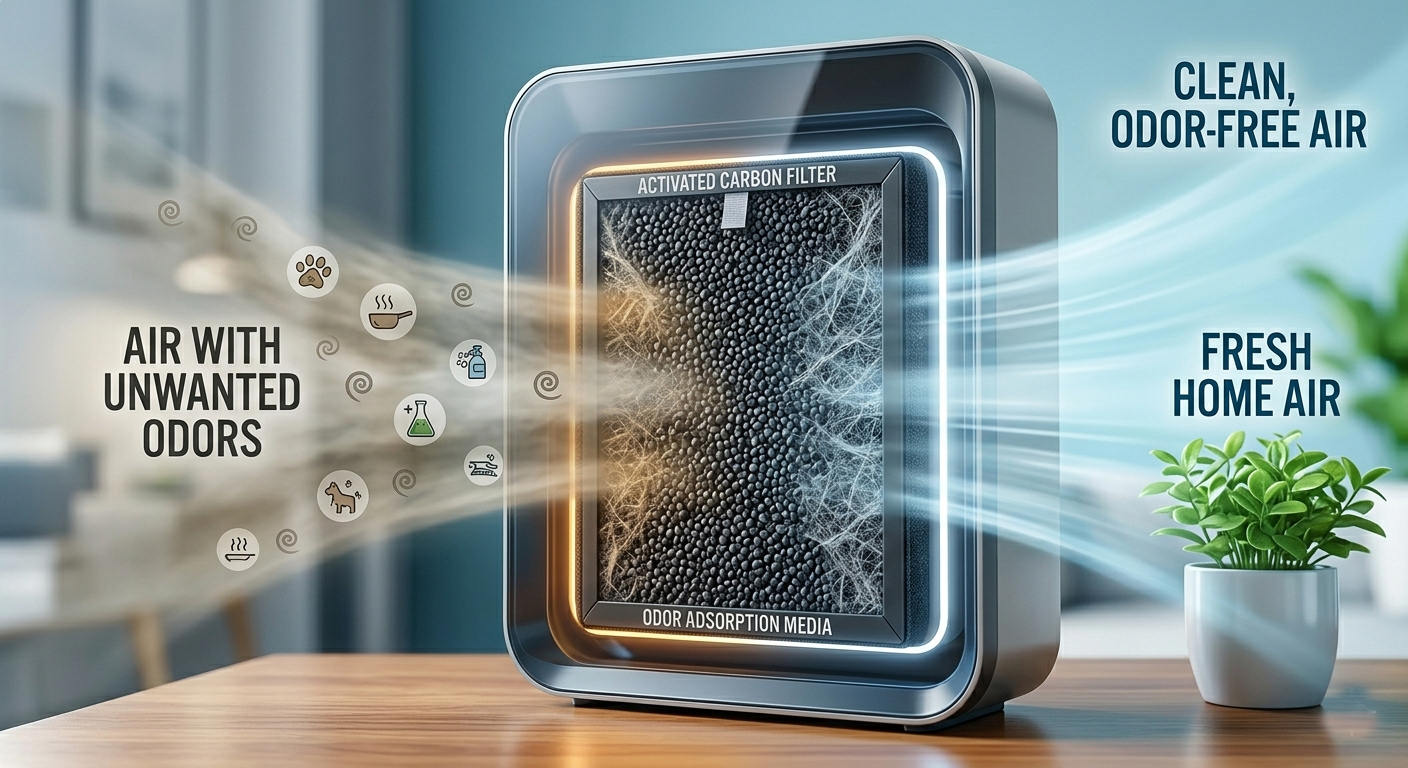
For many high-tech industries, the greatest threat to product quality is invisible, even under a microscope. While HEPA filters are exceptional at capturing solid particles, they cannot stop Airborne Molecular Contamination (AMC)—gas-phase pollutants that can corrode silver traces on circuit boards or ruin delicate chemical reactions.
1. What is Airborne Molecular Contamination (AMC)?
AMC refers to gases and vapors that interfere with industrial processes. These typically fall into four categories:
• Acids: Such as hydrogen fluoride or nitric acid, which can etch surfaces.
• Bases: Including ammonia, which can interfere with photo-lithography.
• Organics: Volatile Organic Compounds (VOCs) that can form thin films on optical lenses.
• Dopants: Elements like boron or phosphorus that can alter the electrical properties of semiconductors.
2. The Role of Adsorption in Chemical Filtration
To neutralize these threats, specialized Chemical Air Filters are required. Unlike mechanical filters that "sieve" particles, these filters use a process called adsorption.
• Active Carbon Media: Utilizing porous carbon media with massive internal surface areas to trap organic molecules.
• Impregnated Media: Chemically treated filter media designed to react with and neutralize specific acidic or alkaline gases.
• Molecular Protection: Placing these filters upstream of FFUs or within Clean Benches ensures that the air reaching the product is chemically inert.
3. Creating an Integrated Chemical Barrier
Managing molecular purity requires a controlled airflow strategy to prevent cross-contamination:
• VOC Outgassing Control: High-grade Air Filter Media must be selected not just for its filtration efficiency, but for its low-outgassing properties to ensure the filter itself doesn't contribute to contamination.
• Buffer Transitions: Equipment like Pass Boxes and Air Showers are vital not only for particle control but for maintaining the pressure zones that prevent gas-phase pollutants from migrating from "dirty" chemical storage areas into "clean" processing zones.
• Localized Scrubbing: For processes that generate their own chemical byproducts, a Clean Booth equipped with chemical filtration acts as a localized "scrubber," cleaning the air before it enters the general facility circulation.
Conclusion
In the era of sub-nanometer manufacturing, the definition of "clean air" has evolved. Integrating molecular filtration into your facility design is no longer a luxury—it is a technical necessity for ensuring long-term product reliability and yields.


