
How to Achieve Effective Contamination Control in Cleanrooms
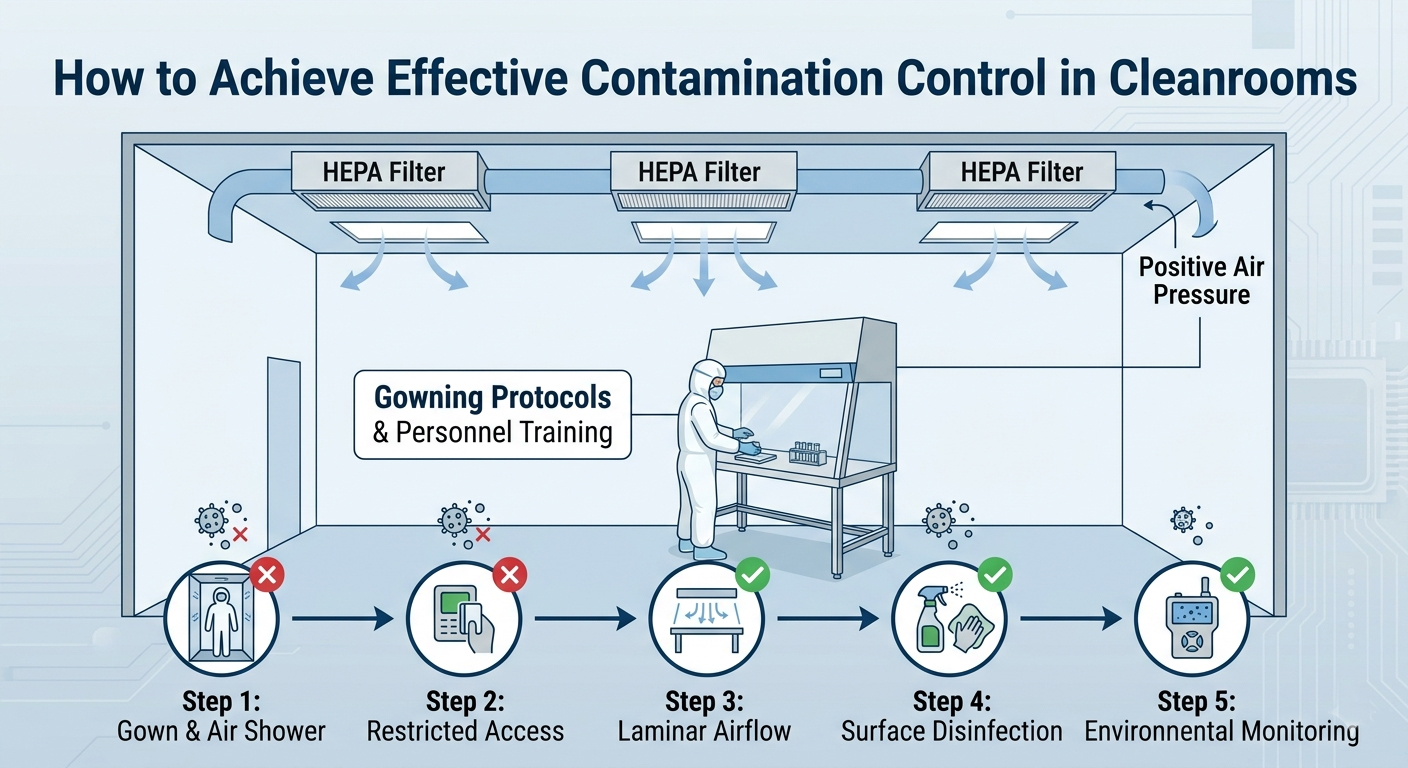
Maintaining a sterile or particle-free environment is a complex science that goes far beyond simply installing a fan. For industries like pharmaceuticals, semiconductors, and food processing, understanding how air moves and how particles are trapped is essential for operational success.
The Science of Layered Filtration
The most common mistake in cleanroom management is relying solely on high-efficiency filters. A professional system operates on a "step-down" principle:
• The Sacrificial Layer: Initial stages use specialized media to capture larger atmospheric dust (5μm and above). This stage is crucial because it prevents the premature clogging of more expensive secondary filters.
• The Intermediate Barrier: Multi-pocket designs are often utilized here to increase the surface area for air contact, allowing for high airflow without a massive drop in pressure.
• Sub-Micron Capture: The final stage involves capturing particles as small as 0.3μm. This is achieved through a combination of interception, impaction, and diffusion—physical principles that ensure air purity reaches 99.97% or higher.
Dynamic Airflow vs. Static Filtration
Static filters remove particles, but dynamic equipment manages the movement of air to prevent stagnation zones:
• Laminar Airflow: To maintain a "Class A" environment, air must move in a unidirectional (laminar) downward stream. Modular fan units installed in the ceiling are responsible for creating this consistent "piston-like" air movement.
• The Buffer Zone Principle: Contamination often enters when doors are opened. Using high-velocity air jets in entryways or utilizing physical transfer hatches (Pass Boxes) creates a pressure buffer that keeps contaminants from migrating between rooms of different cleanliness levels.
• Point-of-Use Protection: In many facilities, it is more cost-effective to create a "room within a room". Specialized workbenches or localized booths provide ultra-clean air exactly where the product is exposed, reducing the energy load on the main HVAC system.
Conclusion
Effective contamination control is an integrated approach combining high-performance materials with smart architectural design. By focusing on the physics of airflow and the logic of multi-stage protection, facilities can ensure long-term stability and compliance with international standards.


